Dogs

Dogs

Every Dog is Different, Every Dog is Good

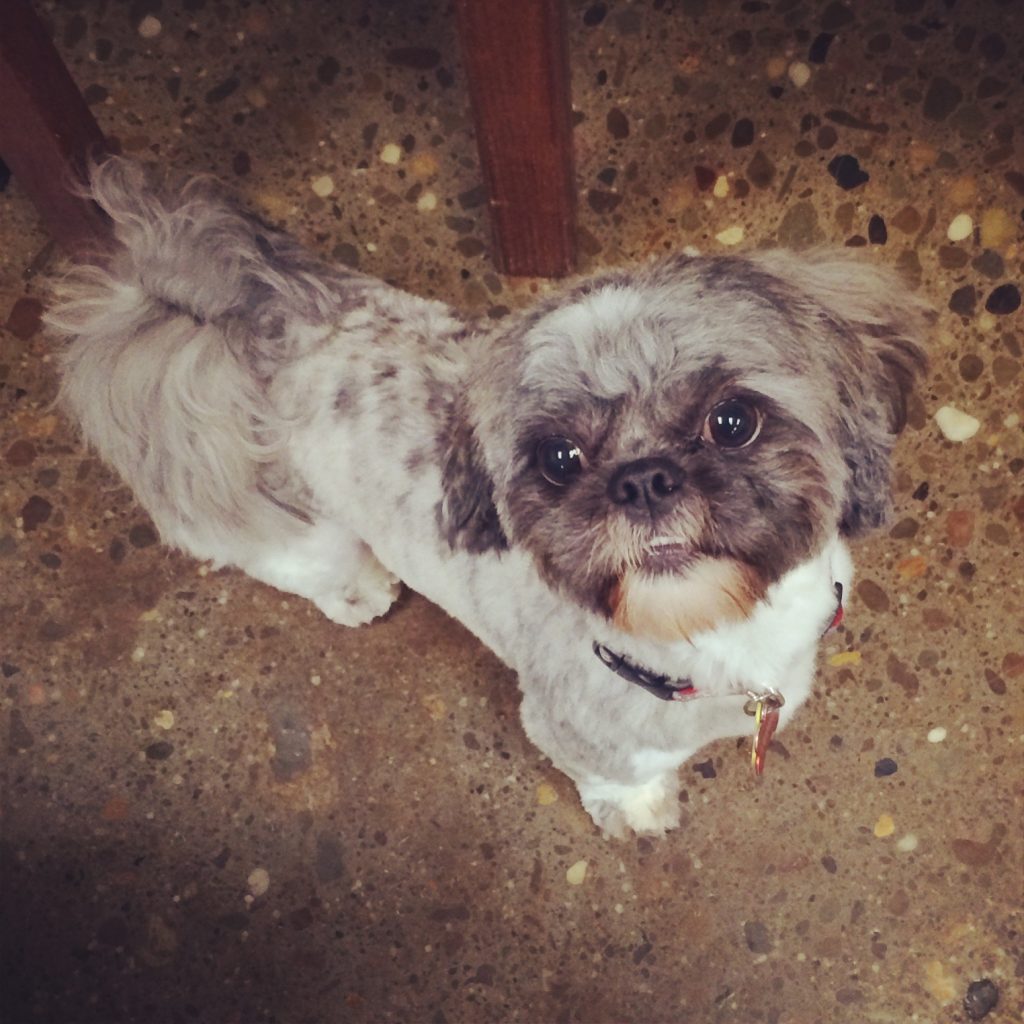
People frequently like to clump dogs into categories. People often want dogs to like every dog they meet, be best friends with every cat, and act like a “babysitter” to their children. They want them to be calm but also fun. Very few dogs fully meet these expectations because very few dogs are perfect. Just as we do not expect other humans to be cookie cutter version of the ideal person, we can’t expect dogs to be this way either. I adopted a shih tzu two years ago, knowing that he had some issues that needed addressed through training. His nameis George and he was under-socialized and when he was scared he would bite (which was often). He’s small and very cute so people often times want to meet him. What they don’t know is that he is fine with being in the presence of strangers as long as they don’t look at him, don’t talk to him, and don’t go to touch him. He takes a long time to warm up to new people and if a new person were to try and pet him, he would snap at them. You’d be surprised how many people blame him and think he is a bad dog because he does not meet their expectations of what a dog should be. Why? Because George doesn’t love and trust someone the second he meets them. version of the ideal person, we can’t expect all dogs to be this way either. As humans, we don’t love and trust someone when we first meet them either. Additionally there are boundaries we expect strangers to respect. If a new person greeted me with a kiss on the lips, I would say that person disrespected my boundaries. And George only has his teeth to tell a stranger that they are disrespecting his boundaries. In a similar way, we can not expect dogs to like every dog they meet. I enjoy the company of other people, but sometimes a person comes along that I just do not like. So when a shelter or rescue claims that a dog is good with other dogs, that does not mean that your existing dog does not have to meet your potential new dog. And if the dogs do not like each other, that does not mean that they are no longer good with dogs. They are just like us in that way, but we often expect them to be better.  The same goes with “good with children.” There is a big difference between a child that respects a dog’s boundaries and a child that does not. Dogs can automatically sense that children are less mature and less predictable than adults, which sometimes can make them feel uneasy and other times they love it! It is important to always supervise children when they are with dogs. Children will be children and sometimes don’t think before they act. For instance, a family member of mine had their dog since he was a puppy, and he grew up around children. He was good with the kids. One night though, the dog was sleeping and their child laid on top of him suddenly and not very gently. The dog woke up from his deep sleep and snapped, scratching the child’s face. Thankfully, it was nothing major and the child was fine. We believe the dog realized half way through what he was doing. This incident does not make the dog bad. He reacted to a situation he should have never been put in, a situation that set him up for failure. My family member kept the dog, taught the child more about respecting a dog’s boundaries, and supervised them more closely.  The people who expect dogs to be perfect will always be disappointed. They are the type of people who return a dog for peeing in the house their first night. We do not want to judge, but we want to educate people to be realistic. Dogs are not perfect, they are all different. Many situations that test our dog require work on our part to set up our dog for success and not failure. My dog George has come a long way in 2 years, but it has been a slow process. He’s not a shut-in because he doesn’t like to meet new people. We meet new people frequently, but it is my responsibility to set him up for success and monitor his behavior and signals that show when he is getting too overwhelmed to the point where he may fail. Sometimes it is hard and I wish that George was different, but he’s my boy and I made a commitment the day I adopted him to love him and help him for his whole life.  So when you are adopting a dog, realize that generally speaking there is no such thing as a bad dog. Dogs are unique like people are unique. I often tell people to look past what they think they want and look at the union differently. Instead of asking “Is this dog right for me?” ask “Am I the right person for this dog?” Just last week I was asked by a potential adopter looking at a young shepherd mix (who was hyper and needed some training) “Is there anything wrong with this dog that would stop you from adopting her?” And I replied “There’s absolutely nothing wrong with this dog. But you have to ask yourself if you can meet her needs. She’s energetic, can you walk her at least twice a day? She’s not trained, can you teach her? She’s young, are you able to keep her the rest of her life?” If more people thought about adopting a dog in this way, they may be a more successful pet parent. Love them for what they are, but never stop helping them to be better!

Dogs

Setting Up Your Adoption for Success

As dog lovers, we all get that excited feeling when we see a dog. For most of us, it doesn’t matter the breed, size, or age of the dog… we just love them and want to pet them and take them home! So going into your local animal shelter to find your new companion can make most of us overwhelmed with excitement! After all, there are so many unique dogs and cats- and you can only pick one! Often times, we witness people feeling pressured to make a decision on their first visit to the shelter. Certainly, there are many instances where an adopter finds their dream-dog right away; however, we advise people who have decided to add a companion to their home to accept that it may be a process prior to stepping foot into a shelter. Pay It Forward for Pets believes every companion animal deserves a chance to prove how great they are, but we also realize that there is a lot of match-making involved in pet adoption. Not every pet is right for your family, just like you’re not the right family for many pets. Though, that’s not a reason to give up hope and go buy a puppy! There’s a homeless pet out there that needs you, you may just need to spend more time looking. After all, pets are a 10-15 year commitment and you don’t want to rush the process of finding your new best friend. Here’s a hypothetical situation, but we’ve seen versions of it often… Someone, let’s call him Steve, goes into adopt a new dog with the best intentions. Steve’s life would be great for a laid-back, middle-aged or senior dog. He has a full-time job, enjoys quiet weekends, he’s independent, he likes short, relaxing walks in the evening, and chilling on the couch at night in peace. Steve is very much aware of what he enjoys doing, and he’s looking for a dog that best fits his lifestyle. So Steve decides to take a trip to his local animal shelter. Walking into the shelter, the first dog he sees is… let’s say… a hyper 1 year old shepherd mix with beautiful blue eyes that’s not at all what Steve was looking for… but she’s just so beautiful and so unique and everyone loves her! The volunteers tell Steve that while this dog is wonderful, she needs a lot of exercise and basic obedience training and has separation anxiety and the list may go on. So excited, that goes in one ear and out the other and Steve adopts the wrong dog for him.  Now we aren’t saying this hypothetical 1 year old, blue-eyed shepherd is a bad dog. She’s just not the right dog for Steve and likewise, Steve isn’t the right human for her either. Steve needed a mature dog to go with his more sedate, relaxed lifestyle. Little did Steve know that while he was infatuated with the shepherd mix, there was a senior dog a few cages away that has been routinely passed up by potential adopters because he’s not playful enough, he only likes short, relaxing walks, and he’s a couch potato. This dog would have been perfect for Steve’s lifestyle but now Steve has this high-energy shepherd mix.  The final outcome will go one of two ways: Steve will honor his commitment to the active shepherd mix and completely change his lifestyle to make her the best dog she can be… or Steve will return the shepherd mix which is a traumatic event for the dog and something that leaves Steve heartbroken and hopeless about finding a companion. We’re writing this article because the second example is what happens more often than not. Who’s to blame here? Certainly not the shepherd mix, though she will endure the most mental stress and confusion. The staff? They were happy a cage opened up to help another dog. The volunteers who tried their best to educate the adopter? No. Really it all comes down to Steve. Instead of admiring the beauty of the shepherd and maybe taking her on a walk before moving on to a dog that would better fit his lifestyle, Steve got too excited. He got too caught up in the process and he lost his sense of reason. Here’s our recommendation: Write down your ideal dog. Start off simple.  How old do you want the dog to be? Puppy? Adult? Senior? What kind of energy level do you want? Low? Medium? High? Pause here… If you answered that you wanted a puppy with a low energy level we’ll tell you right now to start over. You want an adult or senior dog. Now, what about size? Do you have size restrictions where you live that later down the road could cause you to have to return the dog or find a new place to live? What are your thoughts on dog hair? If doesn’t bother you, great. If it does, you will have to get a dog that doesn’t shed as much but that usually means you have to get them groomed every couple months… is that in your budget? Will your new dog be around other dogs, cats, kids? ASK whether your potential new dog would do good with them before signing the adoption papers. ASK what’s the proper way to introduce your new dog to new dogs, cats, or children. And FINALLY, the most important question of all: What would be a deal breaker? What behaviors, if any, a pet exhibited would make you return the pet to the shelter? It’s ok… be honest with yourself and the staff. Honesty, NOW is better than later. If you know that you wouldn’t be able to handle a dog chewing up your new rug, say it. Though there’s no 100% guarantee that this won’t happen, the staff and volunteers may have a good guess as to whether a certain dog would do that or not. If you’ve done the homework and have […]

Dogs

Accepting and Helping Dogs with Anxiety

 It’s almost 2016, and our society has made great strides when it comes to educating people about mental illness. No longer should people have to be ashamed about depression, anxiety, or personality disorders. We realize now that mental illness should be looked at the same as physical. It’s beyond a person’s control, and they shouldn’t be judged for it. We have come a long way and it’s something society should be proud of. But working in animal rescue, we notice that these strides do not always protect our furry friends.      We mention that a dog has anxiety, and suddenly that dog is broken, used-up goods, undesirable, maybe even bad. People judge them. Dogs are supposed to be happy all the time, right? They’re getting fed and they have people that love them, so they shouldn’t be unhappy. Why can’t they just get over it? The past is the past. Once they’re shown enough love, they should be fine. There’s a ton of other dogs out their that would feel lucky to have their life.     Can you imagine thinking this way about a person who has anxiety? No, and it’s time we start applying these new understandings to animals as well.      Dogs can suffer from many different causes of anxiety. Unlike humans, there is almost always a source and therefore a simple solution for their nervous behavior.      The most common is probably fear of strangers. Was that dog treated badly by a stranger? Or were they just never socialized? Doesn’t matter, the result is a scared dog, cowering in the corner, flinching at sudden movements or maybe they lash out, show their teeth… act tougher than they are.      Another common one is separation anxiety. The dog can’t stand when their person leaves. That person who has become their world. “What if that my person never comes back? Why did they leave me?” Just like everything else, separation anxiety has different levels of severity. Some dogs cry or bark nonstop and others go as far as hurting themselves.      Other common causes of anxiety in dogs: confinement, traveling, loud noises, vet/groomer visits, sudden movements, other dogs, thunderstorms, men, women, people in uniforms, certain objects- heck we’ve seen dogs be scared of toasters!  Photo Courtesy of canine behavioral trainer, Shannon Duffy of Your Good Dog      Most likely these anxieties occur for 3 reasons: the dog has had a bad experience in the past, the dog has never been exposed to what’s causing the anxiety, and/or their present or former owners let small fears grow into big fears. So what do you do? Stick them on doggie Prozac and hope they get better? No, though sometimes medication helps and is necessary, it often times makes your dog very sedate and never deals with the underlying issues. Our behavioral trainers say that they’ve never met an anxious dog that couldn’t be helped through a consistent exercise routine combined with slow/steady exposure to what is causing their fearfulness.      It doesn’t take a special human to deal with canine anxieties, but not everyone has the lifestyle/personality to handle them. Someone needs to be patient and committed, as well as make the time to do what needs done and understand how to help their pet. Not everyone is meant to adopt a dog that has anxieties, but one shouldn’t give up on a dog at the first sign of hardship. Every dog can work through their anxiety with the help of their owner. What we often see happen is a dog has “issues” and they are surrendered/returned to the shelter, so that they can become someone else’s “problem.” That dog’s anxiety just got a whole lot worse! Would you stop being friends with someone who has anxiety? Divorce your spouse for freaking out over something you see as stupid? We hope not. We hope you’d try to understand that person’s feelings, and recognize that they need their friends and family to be supportive as they learn to live with their anxiety.      Why can’t we do this with dogs? They offer us their whole heart, loving us unconditionally… and we can’t help them past their worry, show them that life is good and there’s nothing to fear, because they have us to take care of them?      When you initially notice you pet’s nervous behavior, the first thing you should do is let your vet know, and make sure that there is nothing that is causing your pet pain. If you vet recommends medication to help their anxiety, don’t be afraid to refuse for now. Contact a behavioral trainer (we have three listed below that we highly recommend) and tell them what’s going on. Contrary to what a lot of people think: love doesn’t fix anxiety and only giving affection without training makes anxieties worse. Do a session with a trainer you trust, listen to what they are saying- your dog will never feel balanced without your dedication.       You will probably have to adjust your routine, but you have to evolve in order to make a change. Most often, a dog just needs more structure. They feel unbalanced because their life seems unsteady. Though dealing with canine anxiety does take commitment, it’s not as hard to help your pet as you might think. Dogs with anxiety do so much better when they have a routine. Additionally, professional trainers can show you easy ways to expose your pet to what they fear. And you know what… your bond with your dog will be better than ever!     Don’t ever give up on your dog because we can assure you that they would never give up on you. Dogs improve our lives tenfold, and when it’s time that we have to help them… we step up! We don’t surrender! 🙂      As far as the small percentage of shelter dogs who suffer from anxiety. Just know this- They are not broken, […]

Scroll to Top