Shelters

General

Pokémon Go! Helping Shelters

There’s a new app that’s sweeping the nation, getting people outside, and encouraging exercise. Yup… we’re talking about Pokémon Go! It’s all over social media, and looking into big crowds you’ll spot at least one person (probably more) searching for Pokémon. I’ll be honest, I haven’t played it, but I along with many animal rescuers I saw an opportunity.  Shelters and rescues all over the nation are asking Pokémon Go! players to play while walking homeless dogs. It makes sense right? Dogs need exercise too and instead of being cooped up in a cage they can join in the adventure of finding Pikachu. Pokémon Go! may be a passing fad, but wouldn’t it be wonderful to find a long-term love like volunteering? I’m assuming if you’re reading our blog, you’re an animal-lover. Do you play the game? Do your children? You’re walking around anyway, why not do it while simultaneously helping an orphaned dog that would otherwise be stuck in his/her cage for the day. Summit County Animal Control would love to see your faces there! Here’s some of the dogs you’d be helping: If you do decide that you’ll volunteer while playing, the biggest thing we ask of you is to not be entirely glued to your phone as you have to be aware of your surroundings while walking a dog. Dogs should never be allowed to get up on each other unless they’re being properly introduced by someone who knows what they are doing. Make (human and canine) friends at the shelter! Take the advice of volunteers that have been there a long time.  And of course have fun! Let the dog’s nose lead you to the Pokémon….. or wait that’s not exactly how that works…. is it? You get the idea! Summit County Animal Control is located at 250 Opportunity Parkway in downtown Akron with many nearby places to walk. On your first visit, inquire at the from desk about becoming a volunteer. You’ll need to fill out paperwork and then you can get started. Bring your own leash if you have one, though if you do not, you should be able to find one in the volunteer room. You must be 18 years or older to volunteer, otherwise you must be accompanied by an adult. The most important thing to remember is that while a dog should be enjoying his/her time out, they need to remain under control. We don’t want any loose doggies!
Dogs

Don’t Judge a Dog in a Cage

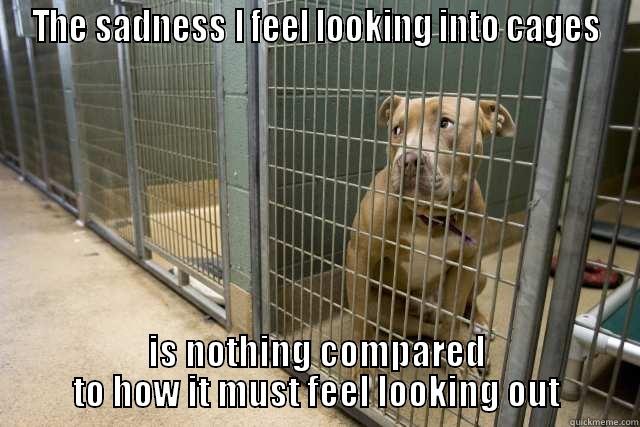
Everyone has heard the saying “don’t judge a book by its cover,” but we forget that we have to do the same for dogs. Often times the behavior one sees from a dog in a cage is not what they would see if they met the dog on a walk or a quiet room. Dogs who are scared off in a corner or even right at the cage door baring teeth end up being fine when removed from that environment. It is a sad but true fact that even after meeting these dogs outside, potential adopters still see a “shut down” or “aggressive” dog. Let’s try to put ourselves in the dogs shoes… or paws rather. We come to a new, stressful, loud place where dogs are always barking or crying. We were, at some point or another, once a loved dog. Either our owner surrendered us or we got loose and never found our way home. We are put into a cage. The staff and volunteers at this place care and try their best to get every single dog out at least once during the day, but what about the other 23.5 hours of the day? We sit and we lay and we watch as people pass us by. “No, not that one” we hear too often. We only have this small space to ourselves, cornered, as people stare in at us. Don’t they know that strong, long eye contact is a threat to dogs? It makes us nervous, those strangers talking and staring at us when we have no where to go. Some dogs don’t mind it at all and others retreat to the furthest corner of the cage and try to ignore the strangers. Personally, we decide that barking, growling, and baring our teeth gets them to move away much faster. It’s such a strange feeling, in any other place we would want that person’s attention, but here… stuck in this cage with all this cooped up energy turning into anxiety… It’s just too intimidating. Pay It Forward for Pets volunteers got to meet the most wonderful dog this past weekend while photographing!! Her name is Whitney. Canine behavioral trainer Ron Shannon brought her in the room and let us know to go slower, she was nervous and growled a little in the cage. Always on the side of caution, we listened. Quickly, however, Whitney’s tail started wagging, her ears perked up, and she was ready to play and receive attention. We kissed her on the lips, talked to her, asked her to do tricks, and wouldn’t you know this dog knew her tricks… even “sit pretty.” We asked her to do it over and over again until we got one of our new favorite photos: Everyone who works with pets can agree on this: They never stop surprising you, and they never cease to amaze you. Whitney was adopted pretty quickly and we heard from her new mom that she’s doing great in her forever home. Many people think that a dog that shows bad in a cage will have other aggressive behaviors. This simply is not true. The stress that these dogs go through in a shelter environment is abnormal for them and you can’t compare that to how they’ll be when they are in the comfort of a loving home. We’ve seen it time and time again though… dogs that show badly in a cage (bark too much, jump all over, spin, growl, retreat to the back, shut down) get passed up. Please remember that on your next visit to the shelter looking for “the one”– Don’t judge a dog’s behavior in a cage! Put yourself in their position and think about what they must be thinking. Furthermore, be smart and ask a staff member or volunteer about the dog. There is a big difference between being nervous of strangers/environment and cage aggression (where they are actually protecting their cage). Most of these dogs just need some time to decompress and are not trying to protect anything other than themselves. If you’ve read an awesome bio on a dog only to visit the shelter and see them acting badly in a cage, ask a staff or volunteer to introduce you to them on a walk. You’ll be amazed at their transition! And if you adopt them… they will only continue to blossom.

Dogs

Dogs in Shelters -The Truth

We have heard every excuse in the book as to why people choose to buy a pet instead of rescuing one. We do not judge people, but we do know better as we work directly with these rescued pets. All the pets pictured in this article have been photographed by PIFFP and were at one point at Summit County Animal Control. Misconception #1: Pets are in shelters because they behaved badly in their previous home. This is the one we hear the most. However, most dogs end up in shelters to no fault of their own. The most common reasons: moving and can’t bring their pet, major life change such as getting married or having a baby, and allergies.Should these pets be considered “bad” because their past family could not be their forever home? Absolutely not. This is not to say that there are not dogs who need to learn proper manners in shelters. Many dogs have never been taught what is right or wrong and were punished by being abandoned by the “family” who failed to teach them in the first place. But wait, if you buy a puppy you’re going to have to teach them these same manners (i.e.sit, come, stay, potty training) so why not give a shelter dog a chance? Misconception #2: All shelter pets have “baggage” due to their pasts. Dogs live day by day. That’s the beauty of them! They do not worry about what happened yesterday or what will happen tomorrow. Every dog in a shelter can be led by a human to become confident and amazing. And let us tell you, there is nothing that can make you feel as good as helping a dog or cat come out of their shell and trust again. Misconception #3: There are no purebred or designer breeds in shelters.  You may have to wait a little longer, but 25% of dogs in shelters are purebred. There are also many breed specific rescues all across the country. If you are determined to find a purebred dog, that’s okay (though we prefer mutts!), do some research on how you can still rescue! Check out how many purebred dogs we’ve seen just in the past year while working with Summit County Animal Control: Misconception #4: There is no way of knowing their background. With most pets, it is true that there is no way of knowing their full background. Every adopter should take their new pet to their vet within two weeks of them coming home to ensure that there is no preexisting illness or medical concern. Other than that, why do we really care? If you have truly fallen in love with a dog or cat… nothing can stop you from loving and caring for them. Misconception #5: Shelter pets are sick and carrying diseases. Disease does spread rapidly in shelter-type environments because of the number of animals they house and pets coming in at a rapid rate. However, responsible shelters take all precautions to prevent this from happening. You should be able to tell just by walking in if the shelter is clean or not just through sight and smell. Ask about their quarintining processes, and how they deal with sick pets to prevent the spread of illnesses. Misconception #6: There are no young pets available. We believe in spaying and neutering as this is the only way to stop pets from being euthanized in the long scheme of our mission. But there are plenty of young puppies available for adoption. Just like purebreds, you have to keep a closer eye out for puppies as the get adopted very quickly.

Scroll to Top