Carrie Having Fun Video
Carrie, having fun and getting love after her professional photo shoot today!
Carrie, having fun and getting love after her professional photo shoot today!
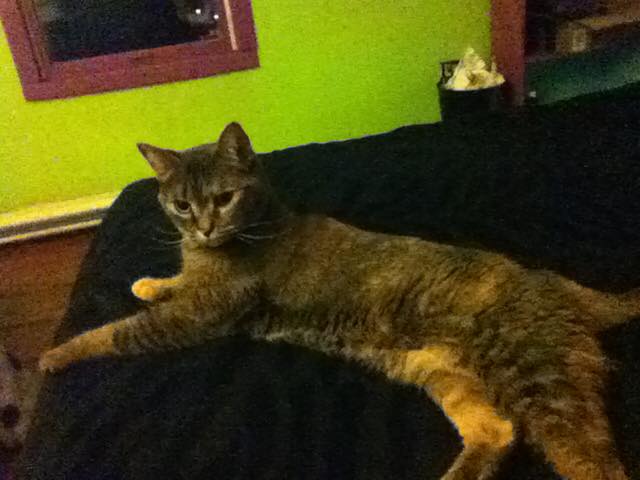
Jessie, photographed last week, found her forever home!!! She seems to have made herself right at home! We got an update from her family: Tabitha and her daughter adopted Jessie and that she is very happy. Tabitha says that Jessie is doing great and that “She is very at home and hates to be alone she is always following one of us.” We think that Jessie knows she has a family now and she doesn’t want to lose sight of them! Thank you for the update Tabitha, and for adopting this sweet girl! We’re very happy to get an update on one of the cats we’ve helped. If you’ve adopted a pet that we helped through one of our six programs, send us an update either on our wall or through a message. We would love to share your Happy Tail with our followers 😀
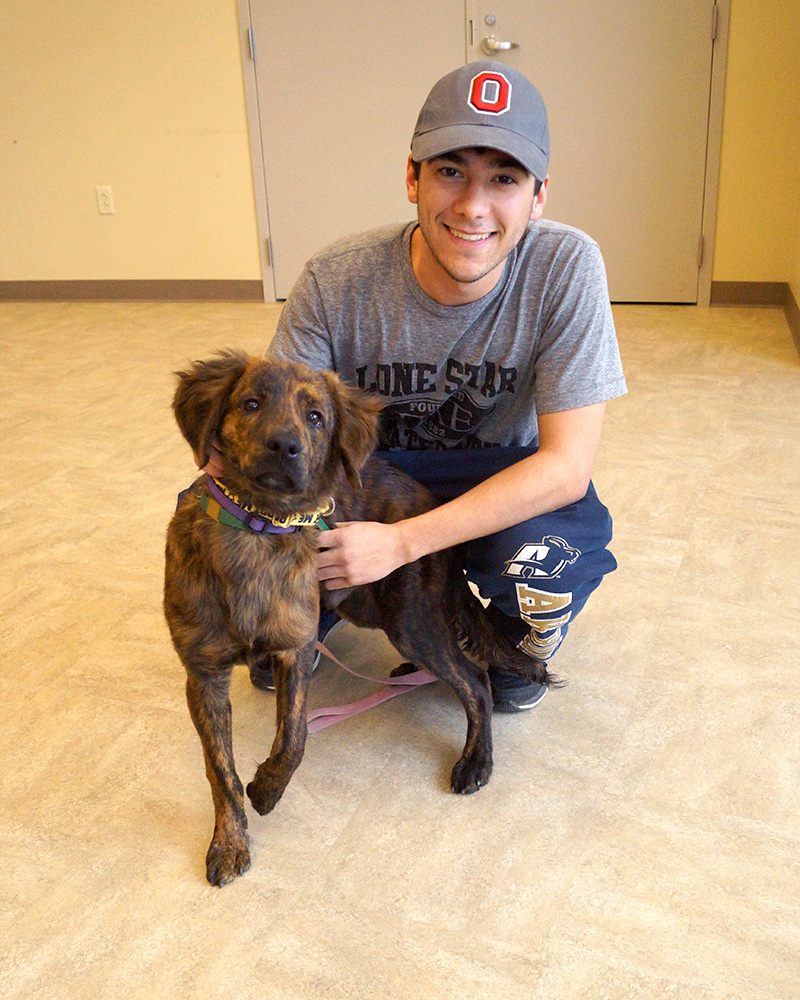
Peanut Butter was adopted on Saturday by his new dad, Damian. This adorable boy is only 7-8 months old and is so excited to be adopted. We know there will be many years of friendship to come between Peanut Butter and his daddy! Thank you Damian for choosing adoption and giving this pup a forever home!
Check out Willow’s first time on our treadmill! She’s quite the natural 🙂 We know that this new skill will help Willow prepare for her forever home as a treadmill gets dogs to a calm state, where they learn the most! Olivia Mandala, part of our Canine Assessment and Enrichment program, says “Willow is an awesome dog! She is very attentive and responsive to training. She has great eye contact, and frequently looks at her handler on what to do next. Willow does need some guidance on how to politely react to other dogs, and we think the treadmill will be a useful tool in this process.” Willow does act overly excited, but we’d like to clarify that it’s not in a mean way. This loving girl is preparing for her forever home at Summit County Animal Control! She’s a joy to be around, and we’ll continue to work with her until she finds her family 🙂

Rusty lives in the Green Twp. area and is a community cat. He is cared for by a 10 year old little girl named Leah. Leah cares for a couple other community cats too; however, Rusty is her newest addition. Responsibly, her neighborhood gets these cats spay/neutered, provides nutrition and outdoor housing for these lucky felines. Recently, Rusty came home dragging his leg. Apparent that it was useless, they contacted Pay It Forward For Pets for help. Crating this independent guy wasn’t the easiest; however, with Leah’s help PIFFP was able to get the cat transported to Dr. Lisa Wilson at Animal and Avian Medical Center in Brunswick (we love this doctor!!!). After x-rays and rest, it was apparent that Rusty’s leg could not be saved. After all, he’d been shot with a pellet gun and the pellet injured his spine which caused nerve damage and the leg dropped. What to do? This isn’t an owned cat. Do we responsibly spend donor dollars to treat this young feline? The answer was an easy one … yes! Why? Because we had a healthy cat that would adapt to 3 legs, we had a 10 year old little girl that loves Rusty and was caring for him properly and, lastly, this effort had “lessons” written all over it for the neighborhood children. As Rusty endured his surgery to remove the leg and convalesce, PIFFP and little Leah went to work on a flyer about Trap-Neuter-Release and community cats. Leah blanketed her neighborhood with the information and a picture of Rusty with his amputated leg. She told the story of him being shot and asked that any family possessing a pellet gun to “please” have a conversation with everybody in the home about kindness and compassion for orphaned pets. In closing, Rusty is now an “owned” pet and will, no doubt, get to live to love his nine lives. Do you agree with our decision to help Rusty? We want your feedback and opinions. Please visit our website at www.payitforwardforpets.org to make a donation to the “Critical Care Fund” to help the many cats out there that we get calls on that need pain-alleviating treatment – like Rusty. Contributions can be mailed to: PIFFP Office, 2136 Yellowcreek Road, Akron, OH 44333. Notation: “Feral/Community Cats.” We thank you … and the animals thank you too.

“All Dolled Up and No Where To Go” came from the frustration of watching great dogs, who happened to be pit bulls, wait too long for a home. The dogs let us dress them up, put them in front of strobe lights that must have been scary, all while minding all the “sit” commands we asked of them. Sound vicious? No. Extraordinary? Yes. There was a time when the American Pit Bull Terrier was considered a family dog in this country. They were a symbol of courage during WWI and the mascot of The United States Marine Corps. They were present in children’s film, most famously “The Little Rascals”, that’s right… Petey was a pit bull. We all know this history! We are dog lovers, we do not discriminate! But the sad truth is that many people see the media stories about pit bull attacks and believe that every pit bull will maul them. They hear about dog fighting rings and gang violence, and they may pity the dogs, but they surely do not want to adopt a pit bull with baggage. Most pit bulls, fortunately, have never been in a fight. They have never attacked children. The truth is, they are dogs. We love them and they are beautiful, but there is nothing different about them. They love you unconditionally, just like any dog who is treated with kindness and love. All of these dogs are available for adoption at Summit County Animal Control. They are all looking for a chance to show how great they are. Remember that many dogs do not show well in a shelter environment. Insist on meeting any dog on a walk outside the shelter or rescue. They are happier outside and their personality shines through.

Sharing another “behind the scenes” success story… Meet Boss. This 8 month old puppy was afflicted with bloat. Bloat is a condition that happens in dogs that are larger in size and older. In fact, we often hear about this ailment in horses so you can only imagine how rare of a case Boss is. Contacted for help by his pet-parent, this sweet boy was in deep distress. After learning more details about his condition, it was apparent that he was in horrific pain and was suffering in his home. After an entire day of phone calls to area veterinarians in an effort to seek pain alleviating surgery/treatment, and with no guarantee for survival, Boss was taken to surgery that night. We are so thankful that Boss survived and will now be able to live his life pain-free as a happy puppy. This young dog fought hard and wanted to live so we fought for him. We still have some vetting follow-up to do and we will see this case to fruition but we want you to see Boss now three weeks later!

Very recently I was volunteering at a local rescue. I was letting an adorable, kind, and wellbehaved pitbull-type dog out to potty. She is very pregnant! A car that was speeding by came to a quick halt when he saw us. He rolled down his window to inquire about the dog. He asked if I knew who the father was, if he was also a purebred pitbull (which by the way does not exist seeing as “pitbull” is not a breed), and I replied that this was a rescue and we do not know who the father is, just that this Mom-to-be needs a safe place to stay. He ask a few more questions before saying “That’s a shame, but I can’t raise no mutt” and drove away. The conversation angered me. Without getting into why this man wanted a “purebred pitbull,” I just want to say “mutts” are awesome! Mixed breed dogs are unique and do not look like any other both in the looks and behavior categories. Only in mixed breeds can you see the muscle and build of an English bulldog with the hair of a terrier and the face of a beagle! Because they have features from two or more types of breeds, some behaviors will not be as prominent. You may adopt that beagle/bulldog/terrier/whoknowswhatelse mix and the dog may never howl like a beagle, but still has those adorable ears! Mixed breeds are also known to be healthier. Bad breeding can cause a multitude of health problems and bring out the worst in a breed of dog. Mixed breeds, again since they have many types of genes, are less likely to develope these breed-specific problems. And by the way, dog competitions are still available to mixed breed dogs, and you do not have to be purebred to be a therapy dog! Beyond being healthier, mixed breeds are in need of saving everywhere! You can go to a pet store and buy a $600 dollar shihpoo, maltipoo, shih malti or other “mutts” they call designer breeds, or you could go down to a shelter and adopt your perfect mixed breed dog that already comes vaccinated and spayed/neutered for typically less than a $100 adoption fee. My sister adopted a lhasa apso/poodle mix and a cockerspaniel/poodle mix that both ended up in animal control facilities before they were a year old. They are great dogs! If you keep looking and don’t give up, anyone can eventually find what they are looking for in a shelter or rescue. I’d like to end on this: People often think that a dog needs to be “perfect” in order to love them, but dogs are dogs. These mutts are worth just as much as purebred, rare, expensive dogs! And to the man who could never raise a mutt, you obviously have never received their unconditional love and appreciation for rescuing them. If you are still not convinced that mutts are awesome, check out the hundreds of purebred rescues out there! We don’t care, as long as you’re saving a life and providing a home to one of the many homeless, unloved pets out there.
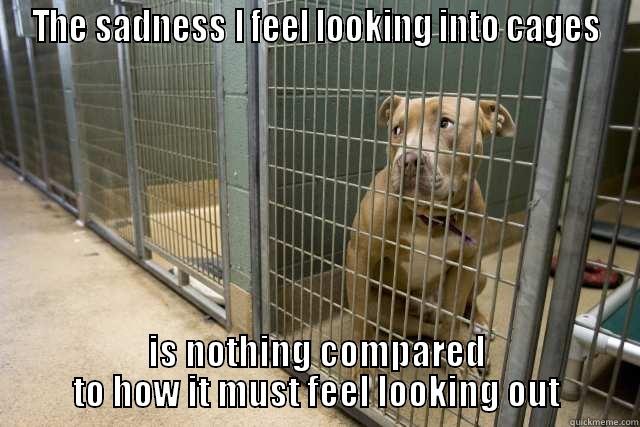
Everyone has heard the saying “don’t judge a book by its cover,” but we forget that we have to do the same for dogs. Often times the behavior one sees from a dog in a cage is not what they would see if they met the dog on a walk or a quiet room. Dogs who are scared off in a corner or even right at the cage door baring teeth end up being fine when removed from that environment. It is a sad but true fact that even after meeting these dogs outside, potential adopters still see a “shut down” or “aggressive” dog. Let’s try to put ourselves in the dogs shoes… or paws rather. We come to a new, stressful, loud place where dogs are always barking or crying. We were, at some point or another, once a loved dog. Either our owner surrendered us or we got loose and never found our way home. We are put into a cage. The staff and volunteers at this place care and try their best to get every single dog out at least once during the day, but what about the other 23.5 hours of the day? We sit and we lay and we watch as people pass us by. “No, not that one” we hear too often. We only have this small space to ourselves, cornered, as people stare in at us. Don’t they know that strong, long eye contact is a threat to dogs? It makes us nervous, those strangers talking and staring at us when we have no where to go. Some dogs don’t mind it at all and others retreat to the furthest corner of the cage and try to ignore the strangers. Personally, we decide that barking, growling, and baring our teeth gets them to move away much faster. It’s such a strange feeling, in any other place we would want that person’s attention, but here… stuck in this cage with all this cooped up energy turning into anxiety… It’s just too intimidating. Pay It Forward for Pets volunteers got to meet the most wonderful dog this past weekend while photographing!! Her name is Whitney. Canine behavioral trainer Ron Shannon brought her in the room and let us know to go slower, she was nervous and growled a little in the cage. Always on the side of caution, we listened. Quickly, however, Whitney’s tail started wagging, her ears perked up, and she was ready to play and receive attention. We kissed her on the lips, talked to her, asked her to do tricks, and wouldn’t you know this dog knew her tricks… even “sit pretty.” We asked her to do it over and over again until we got one of our new favorite photos: Everyone who works with pets can agree on this: They never stop surprising you, and they never cease to amaze you. Whitney was adopted pretty quickly and we heard from her new mom that she’s doing great in her forever home. Many people think that a dog that shows bad in a cage will have other aggressive behaviors. This simply is not true. The stress that these dogs go through in a shelter environment is abnormal for them and you can’t compare that to how they’ll be when they are in the comfort of a loving home. We’ve seen it time and time again though… dogs that show badly in a cage (bark too much, jump all over, spin, growl, retreat to the back, shut down) get passed up. Please remember that on your next visit to the shelter looking for “the one”– Don’t judge a dog’s behavior in a cage! Put yourself in their position and think about what they must be thinking. Furthermore, be smart and ask a staff member or volunteer about the dog. There is a big difference between being nervous of strangers/environment and cage aggression (where they are actually protecting their cage). Most of these dogs just need some time to decompress and are not trying to protect anything other than themselves. If you’ve read an awesome bio on a dog only to visit the shelter and see them acting badly in a cage, ask a staff or volunteer to introduce you to them on a walk. You’ll be amazed at their transition! And if you adopt them… they will only continue to blossom.

We have heard every excuse in the book as to why people choose to buy a pet instead of rescuing one. We do not judge people, but we do know better as we work directly with these rescued pets. All the pets pictured in this article have been photographed by PIFFP and were at one point at Summit County Animal Control. Misconception #1: Pets are in shelters because they behaved badly in their previous home. This is the one we hear the most. However, most dogs end up in shelters to no fault of their own. The most common reasons: moving and can’t bring their pet, major life change such as getting married or having a baby, and allergies.Should these pets be considered “bad” because their past family could not be their forever home? Absolutely not. This is not to say that there are not dogs who need to learn proper manners in shelters. Many dogs have never been taught what is right or wrong and were punished by being abandoned by the “family” who failed to teach them in the first place. But wait, if you buy a puppy you’re going to have to teach them these same manners (i.e.sit, come, stay, potty training) so why not give a shelter dog a chance? Misconception #2: All shelter pets have “baggage” due to their pasts. Dogs live day by day. That’s the beauty of them! They do not worry about what happened yesterday or what will happen tomorrow. Every dog in a shelter can be led by a human to become confident and amazing. And let us tell you, there is nothing that can make you feel as good as helping a dog or cat come out of their shell and trust again. Misconception #3: There are no purebred or designer breeds in shelters. You may have to wait a little longer, but 25% of dogs in shelters are purebred. There are also many breed specific rescues all across the country. If you are determined to find a purebred dog, that’s okay (though we prefer mutts!), do some research on how you can still rescue! Check out how many purebred dogs we’ve seen just in the past year while working with Summit County Animal Control: Misconception #4: There is no way of knowing their background. With most pets, it is true that there is no way of knowing their full background. Every adopter should take their new pet to their vet within two weeks of them coming home to ensure that there is no preexisting illness or medical concern. Other than that, why do we really care? If you have truly fallen in love with a dog or cat… nothing can stop you from loving and caring for them. Misconception #5: Shelter pets are sick and carrying diseases. Disease does spread rapidly in shelter-type environments because of the number of animals they house and pets coming in at a rapid rate. However, responsible shelters take all precautions to prevent this from happening. You should be able to tell just by walking in if the shelter is clean or not just through sight and smell. Ask about their quarintining processes, and how they deal with sick pets to prevent the spread of illnesses. Misconception #6: There are no young pets available. We believe in spaying and neutering as this is the only way to stop pets from being euthanized in the long scheme of our mission. But there are plenty of young puppies available for adoption. Just like purebreds, you have to keep a closer eye out for puppies as the get adopted very quickly.